



















Artificial Intelligence (AI) plays a significant role in shaping the future of Search Engine Optimization (SEO) practices. Here’s how AI influences and transforms various aspects of SEO:
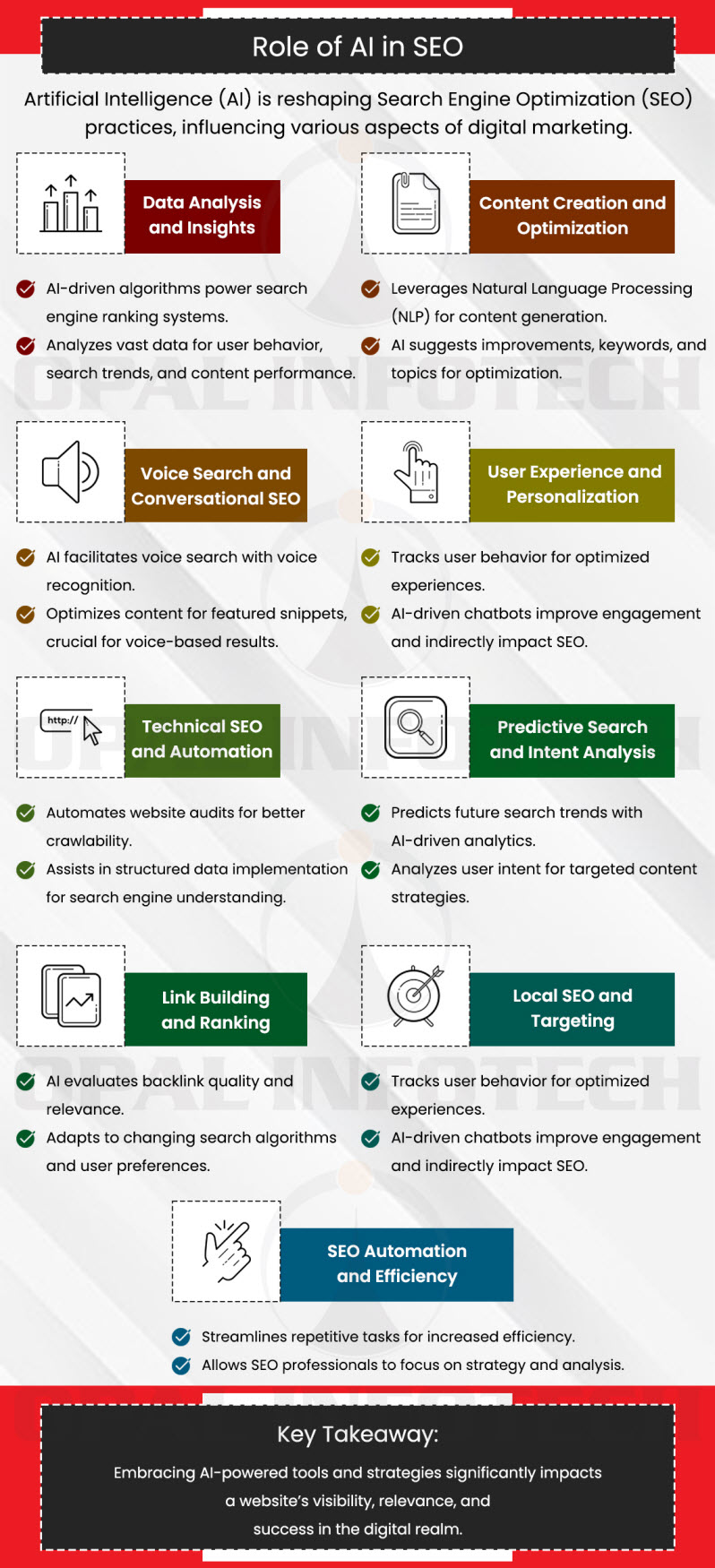
1. Data Analysis and Insights
- Algorithm Updates: Search engines like Google use AI-driven algorithms to process and rank websites based on numerous factors.
- Pattern Recognition: AI analyzes vast amounts of data to recognize patterns in user behavior, search trends, and content performance, providing valuable insights for SEO strategies.
2. Content Creation and Optimization
- Natural Language Processing (NLP): AI-powered tools leverage NLP to understand, analyze, and generate content that matches user intent and search queries.
- Content Recommendations: AI algorithms suggest content improvements, keywords, and topics for better optimization and relevance.
3. Voice Search and Conversational SEO
- Voice Recognition: AI facilitates voice search by understanding and interpreting spoken queries, influencing SEO strategies to align with more conversational and natural language queries.
- Featured Snippets Optimization: AI helps in identifying and optimizing content for featured snippets, vital for voice-based search results.
4. User Experience and Personalization
- User Behavior Analysis: AI-powered analytics tools track user behavior, preferences, and interactions, aiding in optimizing user experience and personalizing content.
- AI Chatbots and Customer Support: AI-driven chatbots enhance the user experience by providing instant responses and assistance, indirectly affecting SEO by improving engagement metrics.
5. Technical SEO and Automation
- Crawl and Indexing Optimization: AI automates website audits, identifies technical issues, and suggests improvements for better crawlability and indexing.
- Structured Data Implementation: AI assists in structuring and implementing schema markup for better search engine understanding and visibility.
6. Predictive Search and Intent Analysis
- Predictive Analytics: AI predicts future search trends, enabling proactive optimization strategies based on anticipated user behavior and search patterns.
- Intent Understanding: AI-driven tools analyze user intent behind search queries, guiding content creation and optimization strategies to meet specific needs.
7. Link Building and Ranking
- Link Analysis: AI algorithms evaluate the quality and relevance of backlinks, assisting in building authoritative and credible link profiles.
- Ranking Factors: AI influences ranking factors by continuously learning and adapting to changing search algorithms and user preferences.
8. Local SEO and Targeting
- Geolocation Targeting: AI aids in local SEO by targeting specific geographic areas and delivering location-based search results and recommendations.
9. SEO Automation and Efficiency
- Task Automation: AI streamlines repetitive SEO tasks, increasing efficiency and allowing SEO professionals to focus on strategy and analysis.
Conclusion
AI is an indispensable tool in modern SEO, revolutionizing how websites are optimized, content is created, and user experiences are enhanced. Its ability to process vast amounts of data, recognize patterns, and adapt to evolving trends empowers SEO professionals to make informed decisions and stay ahead in the ever-changing landscape of search engine algorithms and user behavior. Embracing AI-powered tools and strategies can significantly impact a website’s visibility, relevance, and success in the digital realm.

With a digital legacy established in 1998, the editorial team at Opal Infotech combines decades of experience with cutting-edge innovation. As a premier Web Development and Digital Marketing agency, we specialize in crafting robust digital solutions – ranging from Custom Web Development and eCommerce platforms to Mobile Apps and Business Website Design. Today, Opal Infotech is at the forefront of the technological shift, helping businesses integrate AI SEO and AI Business Solutions alongside traditional powerhouses like Google Ads and Website Maintenance. Our goal is to translate complex tech trends into actionable growth strategies for global enterprises.
We publish articles to empower business owners with the clarity needed to make informed decisions in a complex digital landscape. Our technical content is designed to demystify high-level innovations like AI and SEO, translating code into actionable business growth strategies.
