


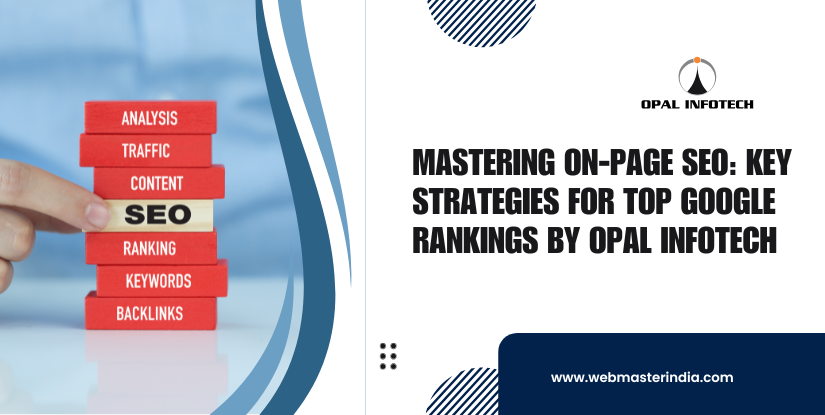















In the digital landscape, securing a prominent position on Google’s search results is paramount for businesses, e-commerce website owners, and professionals.
On-page SEO, encompassing various optimization strategies within your website, plays a crucial role in achieving this objective.
This comprehensive guide delves into the significance of on-page SEO and outlines effective techniques to enhance your website’s visibility and ranking on Google.
Understanding On-Page SEO
On-page SEO refers to the practice of optimizing individual web pages to rank higher and earn more relevant traffic in search engines.
It involves aligning various elements of your website—such as content, HTML source code, and site architecture—with Google’s ranking factors.
Key On-Page SEO Techniques
One of the foundational elements of on-page SEO is keyword optimization. Keywords serve as the bridge between your content and the user’s search intent.
When you conduct keyword research, you’re essentially understanding what users are typing into search engines to find relevant content, products, or services.
To optimize for the best keywords, start by using tools like Google Keyword Planner, Ahrefs, or SEMrush. These tools help identify keywords with high search volume and relatively low competition.
Once target keywords are selected, incorporate keywords naturally into the content—this includes the title, meta descriptions, headers, and body text.
Avoid “keyword stuffing,” which refers to using keywords excessively or unnaturally, as this can negatively impact rankings.
Title Tag Optimization
Your page’s title tag is one of the first elements Google looks at when determining relevance to a search query.
Optimizing your title tag not only helps improve rankings, but it also increases the likelihood that users will click on your page from search engine results.

A good title tag should be:
- Descriptive, indicating exactly what the page is about.
- Concise, typically under 60 characters to avoid being cut off in search results.
- Include primary keywords that accurately describe the page’s content.
- Enticing, prompting users to click through to the page.
For example, if you own a digital marketing services company, a page titled “Effective On-Page SEO Techniques for Google Rankings” clearly tells both Google and the searcher exactly what the content will offer.
A well-optimized title tag can significantly improve your click-through rate (CTR), which is another indirect ranking factor for Google.


Meta Description Optimization
Meta descriptions, although not a direct ranking factor, play a crucial role in driving organic traffic.
When your page appears in search results, the meta description is the short snippet that accompanies the title. This is your opportunity to persuade users to click on your link.

A well-written meta description should:
- Summarize the content of the page succinctly.
- Include the target keywords without appearing overly promotional.
- Be between 150-160 characters long, as Google typically truncates descriptions longer than this.
- Be compelling and action-oriented, inviting users to click through to learn more.
For instance, a meta description for an on-page SEO service page might read: “Boost your website’s ranking with proven on-page SEO techniques. Learn how to optimize your content, keywords, and more for better Google rankings.”
H1 Tag Importance for SEO
The H1 tag is crucial for on-page SEO because it signals to both users and search engines what the primary topic of the page is. Think of it as the title or headline of an article.
While it’s common to see the H1 tag at the top of the page, its significance goes beyond just its location—it tells Google what the page is about and Lays the foundation for the rest of the content.

The H1 tag should:
- Be unique for each page (avoid having the same H1 tag across multiple pages).
- Include the main target keyword.
- Be structured clearly, so users can easily identify the topic.
For example, if the content is about “SEO for eCommerce websites,” your H1 tag could be “On-Page SEO Techniques for eCommerce Websites.”
This helps establish the topic right away and allows Google to categorize your page correctly.
Internal Linking Strategy
Internal linking is an often-overlooked on-page SEO strategy that has a profound impact on both user experience and SEO.
An internal link is a hyperlink that points from one page to another within the same website.

Internal links help in several ways:
- Internal links guide users to additional relevant content, improving engagement and increasing time spent on the website.
- Internal links distribute page authority throughout the site, ensuring that all pages receive some link equity from the homepage or other important pages.
- Internal links help Google’s crawler index your pages more effectively, as search engines can follow these links to discover additional content.
Best practices for internal linking include using descriptive anchor text (the clickable text in a link), linking to relevant pages, and ensuring your most important pages get the most internal links.
SEO-Friendly Content
Creating SEO-friendly content is essential for ranking well on Google. However, it’s not just about sprinkling in keywords—it’s about crafting content that meets the needs of the user while following SEO best practices.
Google’s algorithms focus on content quality and user satisfaction, so your content should be informative, engaging, and well-structured.

Here’s how to create SEO-friendly content:
- Be Comprehensive: Cover the topic in-depth, addressing all possible questions the user might have.
- Use Natural Language: Write in a conversational tone, making the content easy to read.
- Add Visuals: Include images, charts, or videos that add value to your content.
- Update Regularly: Search engines love fresh content. Regularly updating pages ensures continued relevance and authority.
If your content offers unique, high-quality information that solves the user’s query, it’s more likely to rank higher.
Mobile SEO
With over half of global web traffic coming from mobile devices, mobile SEO is no longer optional—it’s essential.
Google’s mobile-first indexing means that Google primarily uses the mobile version of your site for ranking and indexing. Therefore, if your site is not mobile-friendly, it could significantly impact your rankings.

To optimize for mobile SEO:
- Responsive Design: Ensure that your responsive website design services adjusts fluidly to different screen sizes.
- Page Load Speed: Mobile users expect fast loading times. Compress images, reduce redirects, and minimize JavaScript to speed up your mobile pages.
- Easy Navigation: Ensure your mobile site is easy to navigate with touch-friendly buttons and menus.
By prioritizing mobile SEO, you not only improve your rankings but also ensure a better user experience for your visitors.
Image Optimization for SEO
Images are an important element of any website, but large or unoptimized files can affect load speed and SEO performance. Optimizing images prevents slowdowns and provides an additional opportunity to improve SEO.
To optimize images:
- Compress Image Files: Use image compression tools like TinyPNG to reduce file sizes without sacrificing quality.
- Use Descriptive File Names: Instead of using generic names like “image1.jpg,” use descriptive names like “red-shoes.jpg.”
- Add Alt Text: Use alt text to describe what the image is about. This not only helps with accessibility but also provides another opportunity to include relevant keywords.
URL Structure for SEO
A clean, well-structured URL helps both users and search engines understand the page’s content and its place within the site hierarchy. Ideally, URLs should be short, descriptive, and contain relevant keywords.
Best practices for URL structure:
- Use hyphens to separate words (e.g., “on-page-seo-techniques”).
- Keep URLs concise and relevant to the page content.
- Avoid using special characters, such as &, %, or #, since these can confuse search engines.
An optimized URL structure improves the user experience and helps Google understand the context of your page, leading to better rankings.
Page Load Speed and SEO
Page load speed has been a critical ranking factor for years. If your website takes too long to load, users will abandon it, leading to higher bounce rates, which can hurt your rankings.
In fact, Google’s algorithm takes load speed into account when determining rankings.

To improve page load speed:
- Compress images to reduce file size.
- Use browser caching to store frequently accessed elements.
- Minimize HTTP requests and reduce the number of scripts and plugins.
- Leverage Content Delivery Networks (CDNs) to speed up content delivery across different geographic regions.
Optimizing page load speed not only improves rankings but also enhances user satisfaction, making it a key element of your on-page SEO strategy.


SEO Audit for On-Page SEO
An SEO audit is an essential practice that helps identify issues affecting your website’s on-page optimization. By conducting regular audits, it’s possible to uncover hidden SEO problems that may hinder website performance and address issues before negatively impacting rankings.
Here’s how an SEO audit helps with on-page SEO:
- Identifying Broken Links: Broken internal and external links can harm both the user experience and your rankings. A regular audit can help you find and fix these issues.
- Fixing Duplicate Content: Duplicate content confuses search engines and may lead to penalties. During an audit, you can check for duplicate content and ensure that each page is unique.
- Assessing Mobile Usability: Since Google uses mobile-first indexing, checking mobile usability during an SEO audit ensures your site performs well on mobile devices.
- Optimizing Title Tags and Meta Descriptions: Sometimes, title tags or meta descriptions can be missing or not optimized properly. An audit helps ensure that every page has relevant and compelling meta tags.
By conducting an SEO audit, you can stay ahead of potential issues, ensuring that your on-page SEO remains in optimal condition.
SEO-Friendly URL Structure
A clean, SEO-friendly URL structure not only improves the user experience but also plays a role in enhancing your site’s SEO. URLs should be simple, descriptive, and keyword-rich.
Here’s how an SEO audit helps with on-page SEO:
- Keep URLs Short: Google and users prefer short, simple URLs that are easy to read and remember. Steer clear of lengthy number sequences or unrelated characters.
- Use Hyphens Instead of Underscores: When separating words in a URL, use hyphens (-) instead of underscores (_). For example, “on-page-seo-strategies” is preferred over “on_page_seo_strategies.”
- Use Keywords in the URL: Including target keywords in the URL helps Google understand the topic of the page.
- Organize URLs Hierarchically: A well-organized URL structure reflects the architecture of your site. For example, “yourwebsite.com/blog/seo-tips” clearly indicates that the page is part of a blog category.
An optimized URL structure not only aids in SEO but also improves navigation for both users and search engines.
Optimizing Headings for SEO
Headings, particularly H1 to H3, are essential for structuring content in a way that’s easy to read and understand, both for users and search engines.
Search engines use headings to understand the hierarchy and importance of the content on a page. Optimizing your headings is a powerful on-page SEO tactic.
Here are some tips for optimizing headings:
- Use H1 for the Main Title: Your H1 tag should be reserved for the main title of the page, and it should contain the primary keyword.
- Use H2 and H3 for Subheadings: These are used to break the content into manageable sections. Subheadings help guide the reader and also signal to search engines the structure of the content.
- Include Keywords in Headings: Where relevant, incorporate keywords into subheadings to reinforce the relevance of the content.
- Maintain a Logical Hierarchy: Use H2 for main sections, H3 for subsections, and so on. This makes the content easy to scan for both users and search engines.
Optimized headings enhance the readability of your content and its SEO performance.

Let’s Chat
Real Feedback, Real Results
“Opal Infotech was recommended to me by a friend who was a previous, happy client of theirs. I was impressed with my friend’s website he’d had designed and decided to contact Opal to see if they could do the same for my company. My website is now complete and the end result is outstanding. The level of service I received was second to none, my emails and queries were responded to quickly and the online support was a great help. I will continue working with Opal Infotech to utilise their SEO expertise to ensure my new website works well for me. I would highly recommend this company to anyone looking for this kind of service and look forward to working with them in the future.”
Affordable Home Designs – architectsdudley.co.uk – UK
Key Takeaways
- On-page SEO is crucial for ranking higher on Google, with key elements like keyword optimization, title tag optimization, and content relevance.
- Focus on creating high-quality, SEO-friendly content that aligns with user intent and integrates target keywords.
- Use SEO tools such as Yoast, SEMrush, and Google Search Console to monitor and improve on-page optimization.
- Regular SEO audits and updates to your website architecture, mobile-friendliness, and page load speed are essential to maintaining high rankings.
- Implementing an SEO content strategy ensures that your website’s content is both valuable to users and optimized for search engines.
FAQs
Mastering On-Page SEO: Key Strategies for Top Google Rankings by Opal Infotech
What is on-page SEO?
On-page SEO refers to the practice of optimizing individual pages on a website to improve their rankings on search engines. This involves optimizing elements like content, title tags, meta descriptions, images, and internal linking to make the page more relevant and accessible to search engines.
Why is on-page SEO important for Google rankings?
On-page SEO is important because it helps Google understand the content and structure of your website. By optimizing key elements of each page, you make it easier for search engines to crawl and index your site, improving your chances of ranking higher in search results.
How can I improve my on-page SEO?
You can improve your on-page SEO by conducting keyword research, optimizing title tags and meta descriptions, creating high-quality content, ensuring your website is mobile-friendly, and improving page load speed. Additionally, regularly auditing your site for SEO issues is crucial.
What are some tools I can use for on-page SEO?
Some popular tools for on-page SEO include Yoast SEO, SEMrush, Moz Pro, Google Search Console, and Screaming Frog. These tools help with keyword optimization, site audits, and overall SEO performance analysis.
How often should I perform an SEO audit on my website?
It’s recommended to conduct an SEO audit on your website at least once every 6 to 12 months. However, more frequent audits may be necessary if you update your website regularly or notice drops in performance.
Conclusion
In today’s competitive digital world, achieving top rankings on Google is essential for businesses, e-commerce , and professionals website design.
On-page SEO plays a pivotal role in determining your website’s visibility and performance on search engines.
By implementing effective on-page SEO techniques such as keyword optimization, meta description refinement, mobile SEO, and optimizing for page speed, you can improve both your rankings and user experience.
It’s important to keep in mind that SEO is an ongoing process, and the digital landscape is constantly evolving.
Regularly auditing your website, keeping content relevant, and staying up to date with Google’s algorithm updates will help ensure that your website remains optimized and continues to rank well.
If you’re looking to enhance your website’s on-page SEO and drive better results, Opal Infotech is here to help.
Our team of SEO experts offers comprehensive SEO services tailored to your needs, ensuring that your website ranks higher and attracts more organic traffic.
Contact Us
If you’re ready to improve your website’s on-page SEO and boost your rankings on Google, Contact Us today.
Our expert SEO team will work with you to develop tailored strategies with SEO packages that align with your business goals.
You can reach us via WhatsApp, Chat with us, or simply call us for more details about our SEO services and how we can help you grow your online presence.
About Opal Infotech’s Other Services
In addition to our expert Technical SEO services, Opal Infotech offers a range of other digital solutions to help businesses succeed online. These include:
- Website Design: Custom website design services that provide an exceptional user experience.
- Website Development: Developing responsive and functional websites tailored to your needs.
- Website Maintenance: Ongoing support and website maintenance services to ensure your website is always up-to-date.
- E-Commerce Website Design: Building user-friendly and secure online stores that drive conversions.

With a digital legacy established in 1998, the editorial team at Opal Infotech combines decades of experience with cutting-edge innovation. As a premier Web Development and Digital Marketing agency, we specialize in crafting robust digital solutions – ranging from Custom Web Development and eCommerce platforms to Mobile Apps and Business Website Design. Today, Opal Infotech is at the forefront of the technological shift, helping businesses integrate AI SEO and AI Business Solutions alongside traditional powerhouses like Google Ads and Website Maintenance. Our goal is to translate complex tech trends into actionable growth strategies for global enterprises.
We publish articles to empower business owners with the clarity needed to make informed decisions in a complex digital landscape. Our technical content is designed to demystify high-level innovations like AI and SEO, translating code into actionable business growth strategies.